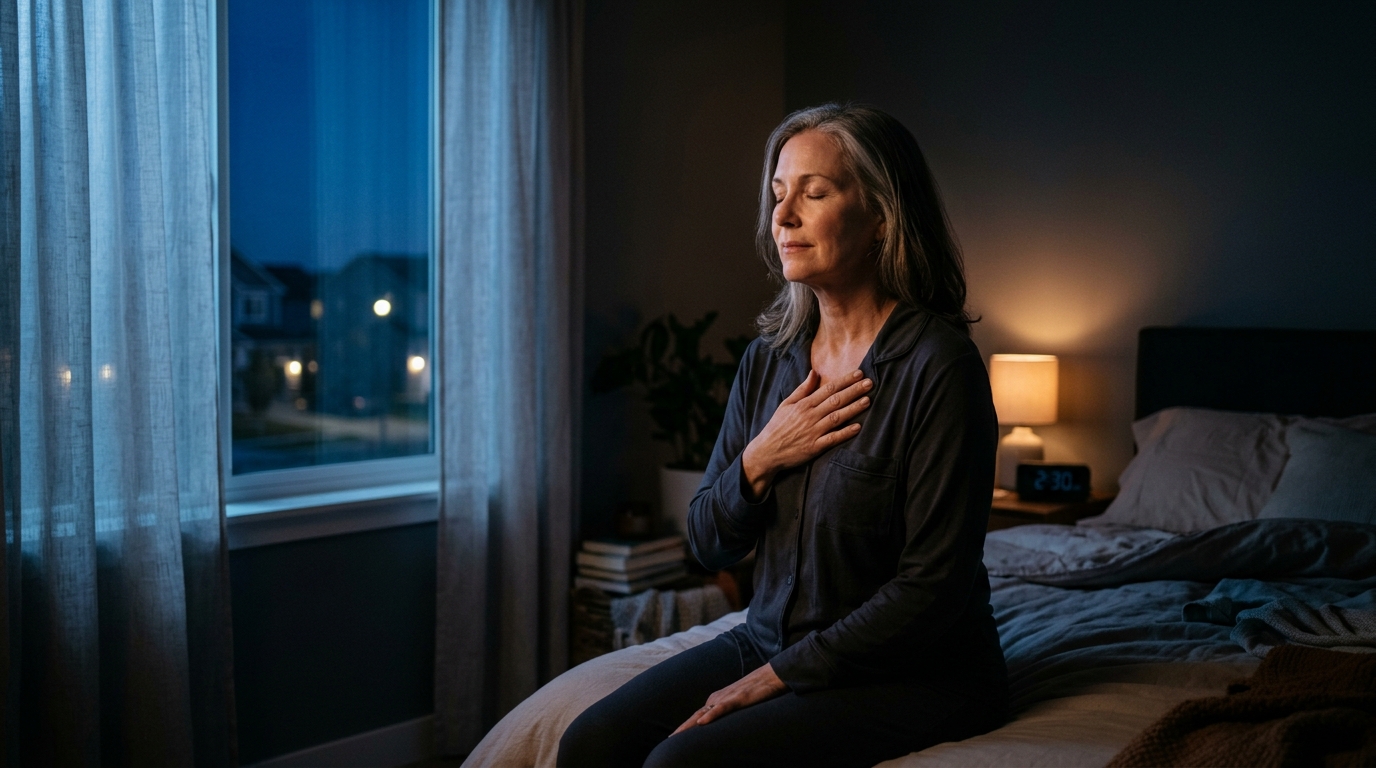
SLEEPLESS NIGHTS can become quiet wisdom not by fighting the clock, but by changing how we respond to the dark’s silence.
At 2 or 3 in the morning, everything feels extra quiet. If you’re awake while others sleep, you might get frustrated, watch the clock, and worry. Many people see being awake at night as a failure, believing the night is wasted and tomorrow’s energy is lost.
But what if we saw things differently? Maybe sleepless nights aren’t struggles, but peaceful moments we can enjoy. If you stop forcing yourself to sleep, your mind can calm down, and your body can relax. In the quiet, away from daytime noise, your thoughts can open up.
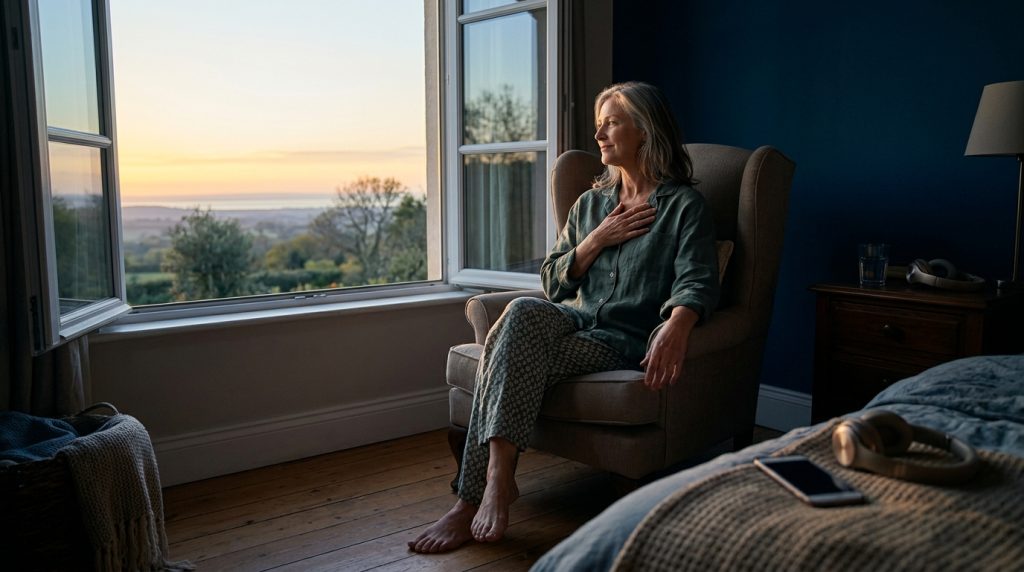
Try replacing frustration with gentle reflection, slow breathing, and positive thoughts. For example, put your hand on your chest, close your eyes, and notice your breathing. Or ask yourself, ‘What is one thing I am grateful for right now?’
These small actions can help you feel more at peace. Instead of feeling drained, you can use these hours to build self-control and balance, turning sleepless nights toward calm insight.
Reclaiming Sleepless Nights:
The Gift of Nocturnal Stillness
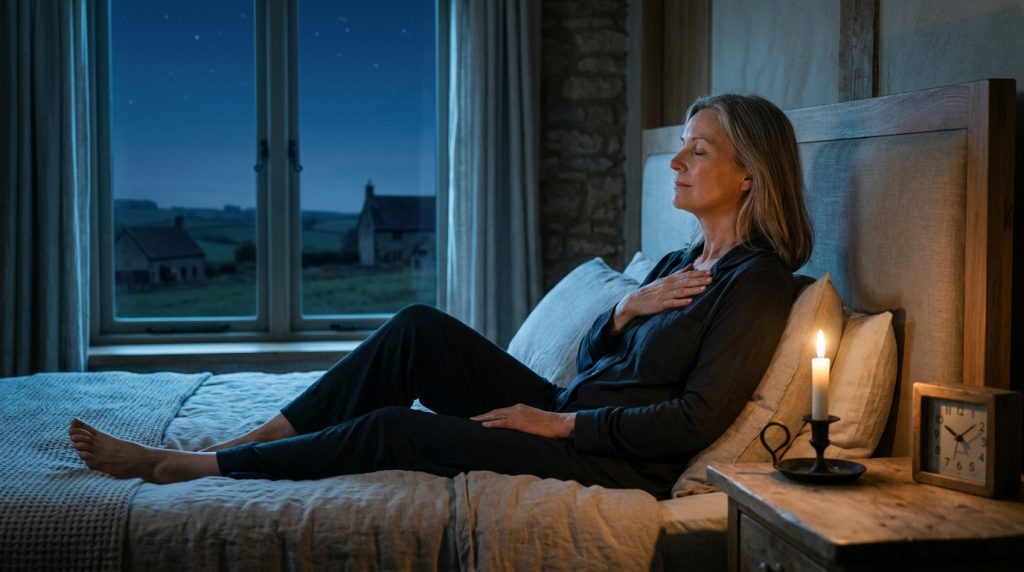
Today we think of sleep in all-or-nothing terms: either you’re sleeping and recharging, or you’re awake and missing out on rest. When we wake up at night, we are afraid we will not have enough energy, patience, or control for the next day. This fear is based on the idea that our bodies need exactly eight hours of sleep, as if we were machines.
In the past, sleep was less stringent. Before the age of electric lights, people would have a period of wakefulness in the middle of the night, sometimes called “first sleep” and “second sleep”.They didn’t feel the need to stay awake then. Instead, they lay in bed and meditated, prayed, thought, and rested in the dark, knowing quiet wakefulness had value.
Shifting from Resistance to Quiet Alertness
If you’re having trouble sleeping, you’re often just in a natural state of quiet alertness. The problem isn’t being awake. It’s what you do when you are. If you start wishing you were asleep, your body releases stress hormones such as adrenaline and cortisol. It makes your heart pound, your muscles tighten, and the room feel stressful.
We acquire true wisdom by going beyond this fear. If we know that not getting some sleep isn’t damaging, we can stay calm in tough moments. Our bodies are resilient, and a calm mind consumes less energy than a troubled mind. When we are still, we give the mind and body a rest.
Physical Stillness:
Restoring the Body During Sleepless Nights
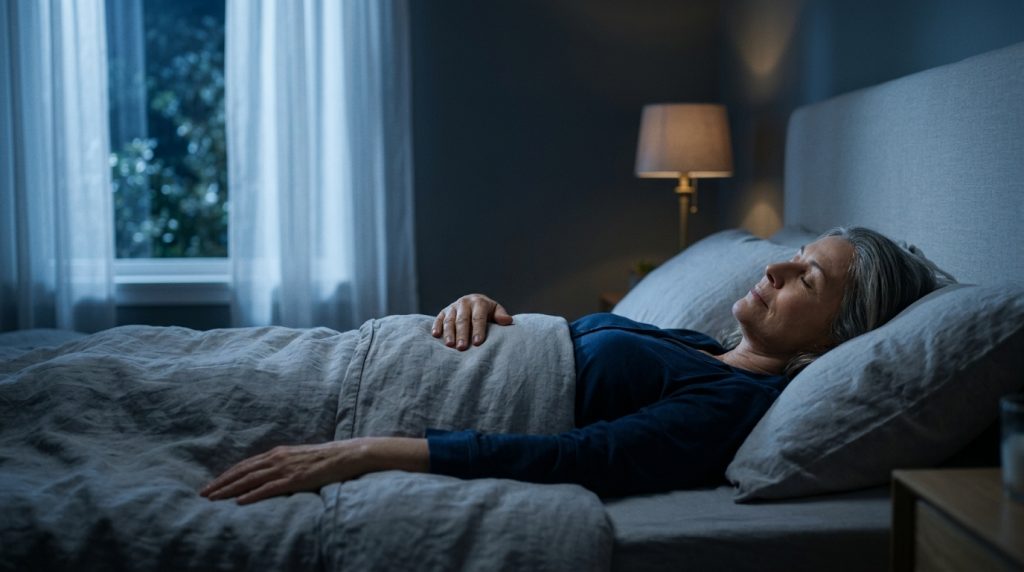
Trouble falling asleep usually isn’t because your body can’t rest, but because your nervous system stays on high alert. Your heart rate goes up, your muscles stay tense, and your mind keeps racing. Many people try to force themselves to sleep, but this only adds stress and makes it harder. Sleep starts when we stop trying to force it and instead focus on relaxing our bodies; by letting our ‘rest-and-digest’ system take control, we signal to our bodies that it is safe to relax.
1. Surrendering the Struggle
When our bodies can relax, we can stop seeing being awake as a crisis. Just lying in a cool, dark room gives your heart, muscles, and other systems a rest. Even if you don’t get to deep sleep, this quietness can help lower your blood pressure and make you feel less tired.
2. Guiding the Breath
Try making your exhalations longer by letting your breath drop gently and deeply into your belly. This slows your heart rate and lowers blood pressure. A simple breathing pattern, like inhaling for four seconds and exhaling for six to eight seconds, can help your body shift from high alert to calm.
3. Releasing Unspoken Tension
Progressive muscle relaxation also helps. Scan your body, relax your jaw, lower your shoulders, smooth your forehead, and let your arms and legs feel heavy as you lie in bed. Since physical tension often comes with mental stress, relaxing each muscle signals to your brain that there’s no need to worry.
Even if sleep doesn’t come right away, your nervous system will recover, your mind will calm, and these quiet times can leave you feeling refreshed instead of exhausted.
Feeding the Mind:
Cultivating Character During Sleepless Nights
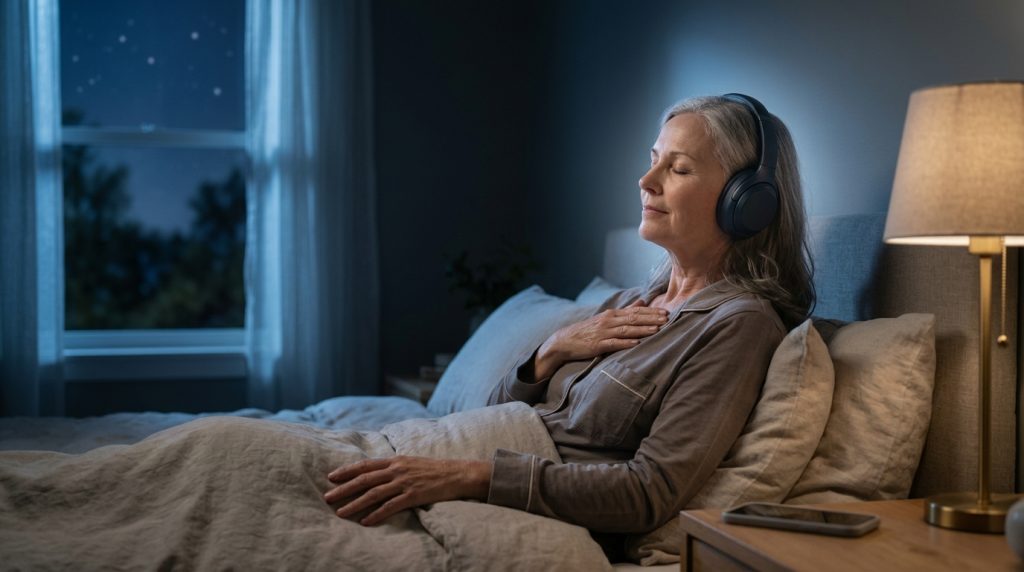
Open up and free yourself from the day’s distractions. If you have nothing to focus on, your thoughts may return to concerns or feelings of frustration. But if we use this quiet time intentionally, it can help us grow, build resilience, and develop our character.
This is a good time for positive audio, such as gentle affirmations, calming music, nature sounds, or guided meditations. Find soothing sounds on YouTube or Spotify, or try apps like Insight Timer or Calm. “I am safe and at peace.” Helpful statements could be, “My mind and body are resting now,” or “Tonight my heart is full of gratitude.”
1. Guiding the Focus Away from Worry
Our minds are more open at night, so we can take in positive messages about patience, gratitude, and balance that will affect how we talk to ourselves. We can fill the passing hours of sleeplessness with thoughts that calm the mind, build character, and establish inner peace.
We always need something to think about. Without a clear focus, sleepless nights can become a worry-fest. You could listen to some calming affirmations or do some gentle self-reflection to give your mind something positive to focus on. Instead of fighting your thoughts, focus on calmness, self-control, and inner strength.
2. Rewiring Neural Patterns
The brain’s ability to change, known as neuroplasticity, relies on repetition and focus. Quiet nights when you can’t sleep are a good time to practice this. When you hear positive thoughts again and again, negative habits can slowly be replaced by healthier ones. Ideas like staying calm or feeling grateful can become part of you and help you handle challenges even after the night is over.
3. Transforming Sleepless Nights into Sanctuary
Scrolling on your phone or worrying can change how you feel about sleepless nights. Instead of viewing being awake as merely tiring or disappointing, you can see it as a chance for self-improvement, and the quiet allows you to reflect, grow, and find true inner peace.
Anchoring the Day:
Rising with Equanimity After Sleepless Nights

What we do with our mornings after a bad night’s sleep determines if those hours are a pleasant memory or a future nightmare. The final step in turning awareness into wisdom is to be peaceful and grounded when the alarm goes off.
1. Greeting the Morning Without Fear
Even if you didn’t sleep well, your day isn’t ruined. As long as you don’t expect the worst, your mind can work well even with less sleep. Wake up with a positive attitude—your body still got some rest. You might feel tired, but it’s usually not as bad as you think. Drink some water, move gently, and take short breaks to boost your energy. Remind yourself that you are resilient and can face the day calmly and clearly.
2. Setting the Internal Clock
To keep your sleep healthy in the long run, start your day by setting your body’s internal clock:
- Get sunlight as soon as you can: Fifteen to twenty minutes after waking up, go outside or look through a bright window. Sunlight tells your brain to stop making melatonin and helps set your daily rhythm.
- Follow your normal routine by not sleeping in or taking long naps. Stick to your usual routine by avoiding sleeping in or long daytime naps. Waking up at the same time every day helps your body feel tired at night.
- Move with Gentleness: Do light stretching to warm up your body and signal that a new day has begun.
3. Living with Quiet Mastery
Getting used to calmly dealing with nights when you can’t sleep is indeed a true lesson in self-mastery. Life frequently brings surprises and changes. The more you show yourself that you can cope with a sleepless night by being patient, relaxed, and thinking positively, the greater confidence you will build in dealing with any situation.
Let your body settle into deep rest, fill your mind with inspiring truths, and turn sleepless nights into a peaceful sanctuary of wisdom.
Conclusion & Call to Action

The Silent Harbor of Self-Mastery
Seek help from a professional if sleeplessness happens frequently, causes you distress, or affects your daily life. While it’s normal to have sleepless nights sometimes, ongoing or serious sleep problems may need expert help and support—some stages involve spending hours in the dark without being able to fall asleep. Instead of feeling frustrated and viewing these hours as a waste of time and energy, we could see what they actually provide—a peaceful retreat from the noise and demands of the day.
If we can let go of the fear of being awake and trade panic for calm, deep breaths, and positive thoughts, our view changes. We learn that a quiet mind at rest when the body is at rest is not a failure, but a deep rest.
When those quiet times come, we can fill our minds with uplifting audio, positive affirmations, and enduring ideas. We can capitalize on that unexpected vigilance. On this particular day, we do not waste time. Beyond the sun, we build inner life, fortify our character, and gain serene confidence.
Transform Your Next Sleepless Nights
Next time you are awake and everyone else is sleeping, try to embrace the silence:
- Let Go of the Struggle: Relax your jaw, relax your shoulders, let your body be still. Do not force sleep.
- Anchor Your Mind: Choose a soothing, consistent audio track, such as nature sounds or positive affirmations, to help you focus your mind, and set a 45-minute sleep timer.
- Meet the Dawn with Equanimity: When it’s light, get out into the sunlight and feel confident that the quiet has refreshed your mind and body.
Join the Wisdom Community
What do you do when you’re quietly awake and can’t fall asleep? Have you found any audio or affirmations that help you feel peaceful at night?
Share your thoughts in the comments below, or send this article to a friend who might need a peaceful way to handle sleepless nights.
Frequently Asked Questions:
Navigating Sleepless Nights
Of course, waking up in the middle of the night raises practical concerns about energy, routine, and health. Focus on quiet physical rest, gentle breathing, and a calm, unhurried mind, rather than racing against the clock or worrying about daytime fatigue. If wakefulness upsets you, a brief pause in dim light can help reset your body’s rhythm until you feel naturally sleepy again.
What if I am required to carry on at work or school after having no sleep?
Focus on quiet confidence, not fear. Even if you had spent the night in physical stillness—by taking deep breaths and maintaining a calm state of mind—your body and brain would still have benefited from the experience.
Trust your body’s natural morning rise in cortisol to help you get through the day. Continue your normal routine, get out into the morning sunlight to boost alertness, and avoid caffeine too late in the day. You will frequently discover that your mental focus and energy levels are surprisingly good.
At what stage should I be concerned that my inability to sleep is a sign of an illness?
It is normal to be awake from time to time, but see a healthcare professional if you cannot sleep for more than three nights each week for three months or longer.
Also, get a medical evaluation if waking up at night is accompanied by severe physical discomfort, chronic loud snoring, gasping for air, leg restlessness, or severe daytime difficulties that affect your ability to drive safely and carry out everyday activities.
Can you give concrete examples of uplifting audio or affirmations someone can use at night?
Select gentle, steady audio played at a low volume with a sleep timer. Examples of such audio include:
- Character and Mindset Affirmations: Slow-paced, present-tense statements like “My mind is calm, and my body is completely at rest”, “I meet each moment with patience and inner peace”, or “I let go of today and trust in my strength for tomorrow”.
- Soundscapes: Steady rainfall, low-frequency brown noise, or ocean waves to help regulate your breathing.
- Spoken Word: Monotone, low-engagement audiobooks or soothing personal development podcasts that focus on philosophical or timeless themes.
Should frequent or chronic sleepless nights become a regular occurrence, should I then always use this method?
It is always better to remain physically still and calm than to panic in the dark. But a calm mindset should not replace a proper sleep assessment if wakefulness continues for a long time. When insomnia occurs regularly, use the quiet mindset method as a supportive measure alongside established treatments such as Cognitive Behavioral Therapy for Insomnia (CBT-I), good circadian routines, and advice from a medical professional.
What should I do to deal with feeling tired or having low energy the day after if I haven’t slept much?
Stabilize your energy by relying on natural aspects of your daily routine rather than forcing yourself to wake up: Get early sunlight—spend fifteen to twenty minutes outside as soon as you wake up to set your body clock.
- Stay Hydrated & Move: Drink plenty of water and do light, gentle movement, like a short morning walk.
- Limit Naps: Avoid long daytime naps. If necessary, take a brief 15- to 20-minute power nap before 2:00 PM so you do not deplete your sleep drive for the coming night.
- Maintain Equanimity: On sleepless nights, remind yourself that one quiet night will not compromise your health, and let your body build natural sleep pressure for deep sleep tonight.